

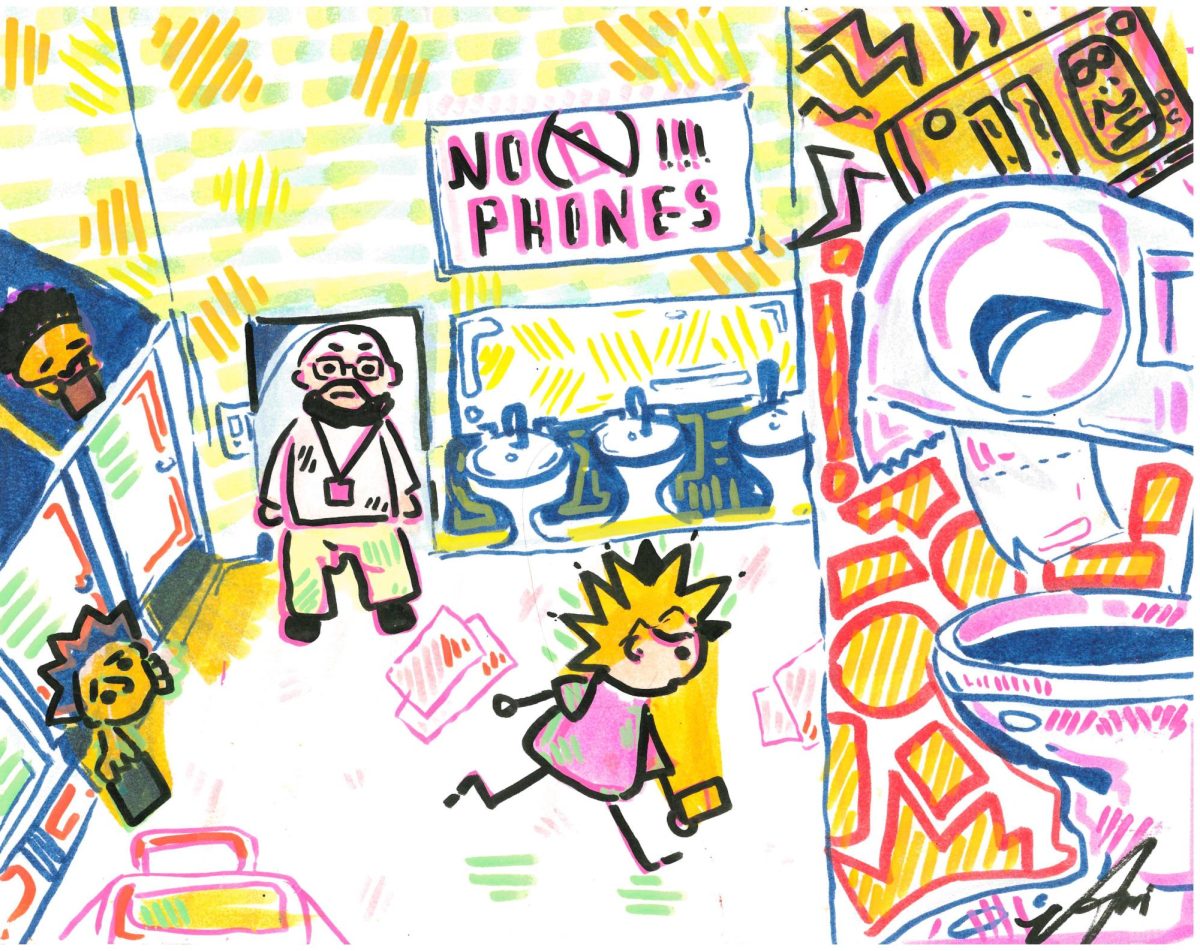
With phone usage becoming heavily intertwined with the daily lives of youth, students, school administrators and state legislatures are discussing phone bans as tools used to aid student development.
According to Johns Hopkins University, discussion surrounding phone bans follows the “mounting” research suggesting “stymied” social-emotional development, mental health crises, and “dwindling attention spans” stemming from phone usage.
“They’re distracted,” adolescent child psychiatrist Carol Vidal said. “It now seems like practically everyone has ADHD because they’re being constantly bombarded with images, sounds, and all kinds of actions that are potentially interfering with their capacity to concentrate in school.”
Conducted in May of last year, the “largest-ever” study on cell phone bans found mixed results on the benefits of phone bans.
“A year ago, the National Bureau of Economic Research brought together academics from top universities to study these bans and highlight possible steps forward,” NPR said.
NBC said that, though teachers reported fewer distractions during class time, improved academic performance and behavior were not results backed by the study.
In a more recent report from the study, NPR said that the study provided evidence for a “dramatic” drop in usage.
“There’s a ton in this study, but a lot of it is quite promising, like disciplinary action, for instance. It initially rose in the wake of these bans but leveled out by the end of the study,” NPR said. “As for emotional well-being, students said they felt worse in the first year. But by the third year, students reported feeling better off than before the bans.”
According to the 74, with all these studies done, it is safe to say that phone bans do work to an extent.
“Teacher surveys in schools that banned phones bell-to-bell found that the share of students reporting using phones in class for personal reasons fell from 61% to 13%,” the 74 said, “and GPS data suggest phone usage dropped dramatically — a ‘large and persistent decline” on campuses with bans, researchers noted.
As of now, states across the nation, including Pennsylvania, have implemented bans on cell phone use.
“Within the last year, school phone bans have exploded in state education policy,” The Albert Shanker Institute said. “As of 2025, 26 states have implemented a complete, or bell-to-bell, ban on phones in schools, and 4 more have mandated some regulation on their use.”
When it comes down to the policy regarding phone bans, despite their effectiveness in maintaining focus in the classroom, policies need input from a wide range of affected parties in order to truly be effective.
“Both researchers agree schools need phone policies shaped with input from students, families, and teachers — plus opportunities to teach ‘digital agency,’ or how to use technology intentionally and responsibly,” the Harvard Graduate School of Education said.