

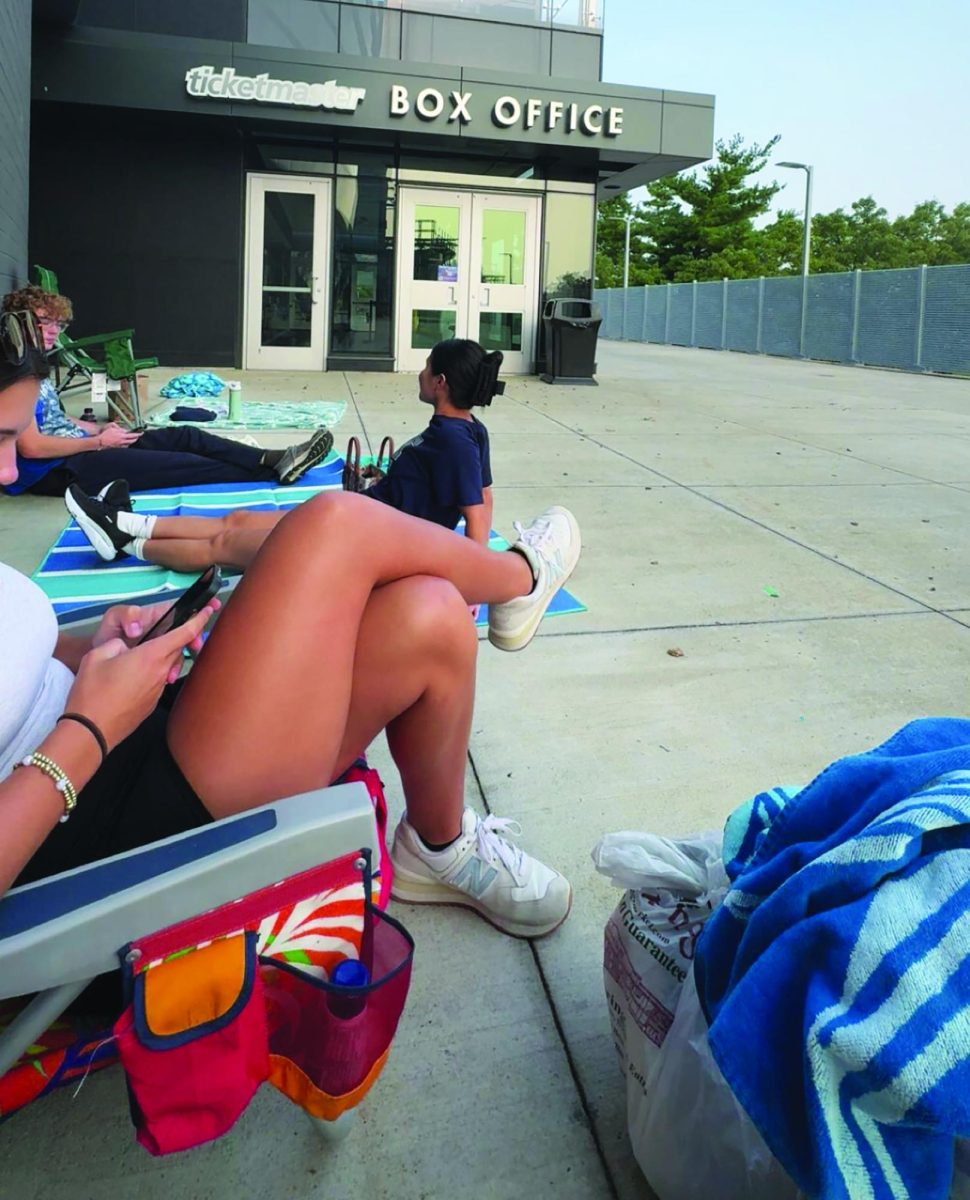
With a load of fees and high demand from artists and resellers, students are finding it frustrating to see their favorite artists’ concerts because ticket prices have risen over the past few years.
However, although these students see dents in their bank accounts and feel an overwhelming sense of spending, it comes down to their experience.
According to business teacher Mike Feliciani, he thinks concert tickets are overpriced, along with the fees added on and the third-party website.
However, when it comes to students spending large amounts of money, he believes it should come down to budgeting and how much you favor an artist.
“If you’re a concert goer and that’s what you do, but then the rest you’re spending is fairly locked down, then it’s fine,” Feliciani said. “That’s the kind of choice you’re making.”
Students see high ticket prices through third-party websites like SeatGeek, StubHub, Vivid Seats or TickPick.
These websites allow individuals to sell tickets they bought at face value on a secondary marketplace, where they tend to list them for more than they paid.
Feliciani says these websites have gotten worse over the years, and that this is an economic concept called rent-seeking.
“So rent-seeking is when somebody inserts themselves, and what would be a normal transaction that doesn’t add any value to the seller or the buyer,” Feliciani said.
“So these third party ticket scalpers are just increasing prices and not adding any value.”
As for junior Ryan Riexinger, she goes to concerts for the music and atmosphere, but feels that third-party websites sometimes take away from her seeing an artist she wants to see because of “bots” that scam individuals into paying twice the original price.
“The resellers, I understand, but I think the bots, and the accounts like SeatGeek accounts and StubHub especially, they don’t try to fix anything,” Riexinger said. “They do not know how to fix the way that the bots are getting it first.”
Riexinger recently bought Harry Styles tickets for his new upcoming Together Together tour. She received them from a third-party website, where all the tickets totaled $2,000 and were “not even good seats” for how much she paid.
As for senior Alisha Linthicum, she notices that concert tickets are more expensive and in higher demand when the artist is more mainstream.
Linthicum finds this difficult because resellers are aware of an artist’s demand and will bump up prices to make a profit. Linthicum believes some fans will buy these prices, but she thinks it is unfair. “I think the ticket companies upcharge a lot. I also think that when you buy them and don’t get pre-sale access, you have to buy them through resale,” Linthicum said. “Obviously, resellers are making them super, super expensive.”
According to Linthicum, the prices have not stopped her from going to concerts; they do affect where she sits because she feels concerts are an experience rather than a “material thing” to buy.
However, there are still ways to get concert tickets at an affordable, reasonable price.
“Smaller venues, like the Foundry and the Fillmore, I get really cheap tickets for. Since they’re less mainstream artists,” Riexinger said.
Another way is to sign up for a presale and get early access to tickets. But, according to Linthicum, too many people sign up for Ticketmater making it nearly “impossible” to buy tickets before it sells out.
“I think [Ticketmaster] needs to stop giving pre-sale to too many people. I feel it has to be the exact number of tickets,” Linthiucm said. “If you have pre-sale, you should be getting tickets.”
Riexinger thinks music platforms should be able to sync users’ accounts to Ticketmaster to help dedicated fans secure tickets at affordable prices first.
The struggles of the high cost of concert tickets
From seeing a favorite artist or going to concerts as a hobby, students are struggling to keep up with concert ticket prices. Third-party websites increase the total cost due to fees and high demand.
More to Discover





About the Contributor
Maya Bernhauser, Social Media Editor