

By providing a variety of fresh, locally-grown produce, farm stands foster sustainability and allow customers to know where their food comes from while promoting buying from small businesses.
According to Limerick Homegrown Produce and Trading Post owner Michael Panamarenko, there are many advantages to buying homegrown produce.
“I think there are multiple benefits,” Panamarenko said, “it helps your local community to keep businesses alive and to have good quality local products.”
For Freed’s Produce owner Nancy Freed-Welby, the support from the community is essential for keeping her business thriving.
“The community is very supportive, and we’re really grateful,” Freed-Welby said.
In addition to supporting small businesses, buying from farm stands can provide fresher produce than grocery stores.
According to Living Hope Farm volunteer Eleta Hittinger, taste and freshness are improved in locally sourced produce.
“You buy [produce] at the grocery store, you better use it that week. I’ve had our bags of arugula last three, four weeks in the refrigerator, just because it’s so fresh,” Hittinger said. “They harvest it one day, the next day you’re picking it up…so it’s so fresh.”
As for Upper Salford resident Rob Smart, who plans to run a farm stand with his daughters this summer, local produce “just tastes better.”
“You know where it comes from, you’re supporting local businesses and farmers and it’s just fresher,” Smart said.
For many people, knowing where their food comes from is an important factor in their shopping decisions.
According to Freed-Welby, people consider where their food is originating from now more than ever.
“Now with people so concerned where their food comes from, it’s made us extremely busy,” Freed-Welby said.
In addition to supporting small businesses and offering freshness and higher quality, farm stands are able to present a wide variety that larger stores may lack.
For Panamarenko, having an assortment of different types of vegetables keeps things “interesting and fresh.”
“We don’t just have one type of tomato, but probably five or six or seven different varieties,” Panamarenko said.
On top of assortment, farm stands foster sustainability through practices such as maintaining soil health.
According to Living Hope Farm volunteer Paul Caracciolo, sustainable farming practices utilize compost and insects to benefit the soil in which the produce is growing.
“We don’t use artificial pesticides or artificial fertilizers,” Caracciolo said. “It’s beneficial for the earth, because it’s the way that things should be.”
Running and tending to a farm can be fulfilling for many, providing satisfaction from hard work.
For Freed-Welby, the most rewarding part is tending the same land as her family.
For Freed-Welby, the most rewarding part of farming is being able to tend to the same land her family has farmed for generations.
“I can’t believe I get to work the same soil that my grandparents made their living on,” Freed-Welby said. “I walk out the door when it’s in season and everything’s growing and I’m in awe. It’s beautiful.”
As for Smart, starting a farm stand will be a bonding experience for him and his daughters. “[My oldest daughter] is really into it,” Smart said, “I’m hoping as they grow, they’ll get more and more into it.”
Farm stands yield ‘un-beet-able’ quality, variety
To offer customers an alternative to typical grocery stores, local farm stands sell a wide assortment of high-quality produce through sustainable methods that ensure consumers know where their food is coming from.
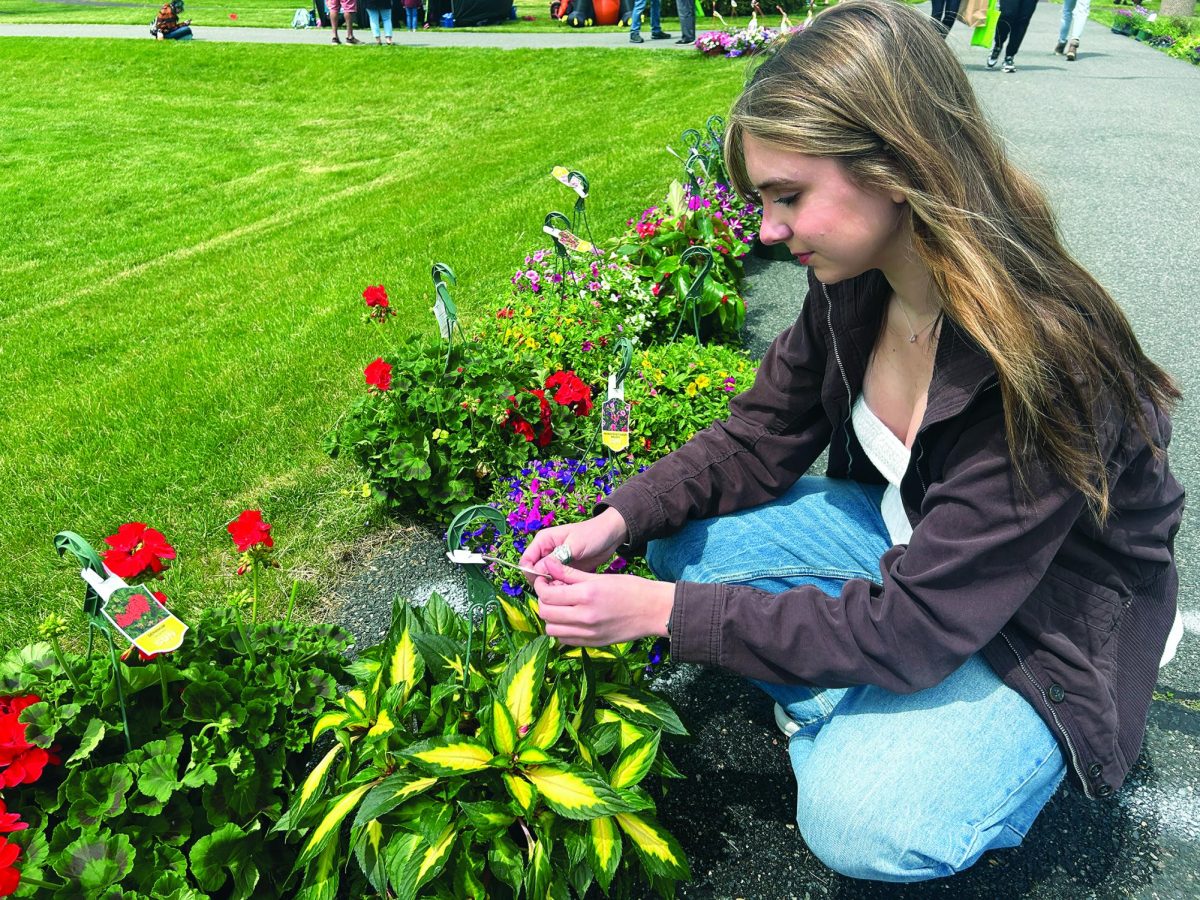
Spring has sprung…Examining a hanging flower basket, sophomore Hayden Pickard attends the Upper Salford Locally Grown Showcase at Upper Salford Park on May 2.
More to Discover






About the Contributor

Emerson DeGeiso, Staff Writer