Due to alleged concerns about misinforming the public, threats against the media from government officials and commissions for speaking negatively about the war have begun to arise since February 27.
On February 27, attacks on Iran officially began, with coordinated missile strikes hitting locations across the country.
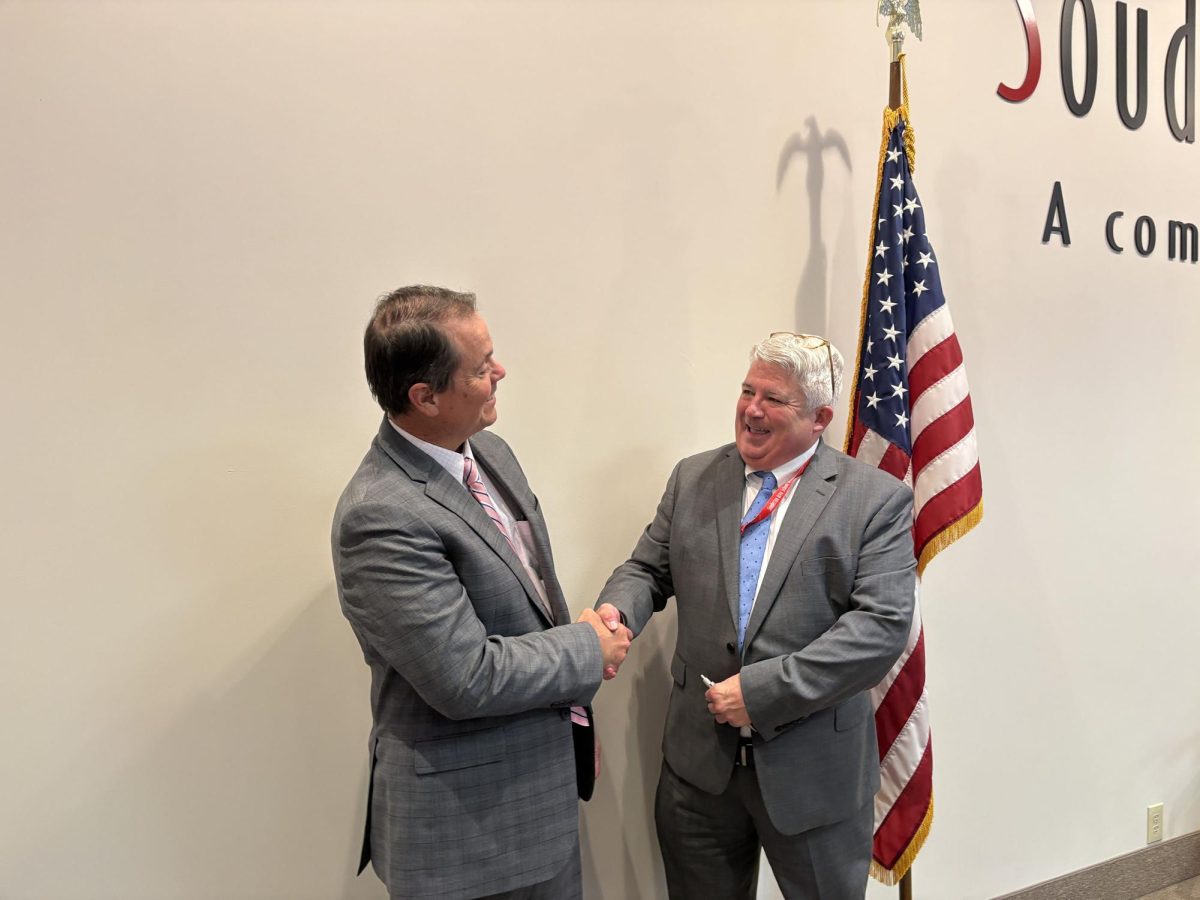
According to the BBC, on March 14, the Federal Communications Commission (FCC) Chair Brendan Carr threatened to revoke broadcasters’ licenses over the coverage of the War in Iran, admonishing broadcasters for viewing licenses as “property rights” and things “that cannot be revoked.”
“Carr’s threat came after he accused broadcasters of ‘running hoaxes and news distortions,’” the BBC said.
Reinforced by President Donald Trump’s words—claiming “‘Lowlife papers’ and Media want us to lose the War”—it appears that the coverage of the War elicits words almost forcing secrecy from media outlets.
According to the BBC, a few democratic lawmakers have labeled Carr’s words as “unconstitutional” as the FCC issues licenses to independent broadcast stations, not “TV networks.”
This is not a new phenomenon, especially in the U.S.
According to the Supreme Court, in 1971, the case New York Times Co. v. United States was brought to trial. The case surrounded the release of the “Pentagon Papers” (papers describing the realities of the Vietnam War), and whether it was constitutional for the New York Times to report these findings to the public.
“The First Amendment overrides the federal government’s interest in keeping certain documents, such as the Pentagon Papers, classified,” the Supreme Court said.
According to NPR, governments, in the past, “really entrenched a belief that if people actually saw war in all its gory awfulness, that it would be untenable to pursue military ventures.”
That statement has some effect in the court of law.
In 1968, Schenck v. The United States—a case, whose verdict set limits to the First Amendment, especially during times of war via the Espionage Act, created the Present Danger Test.
The Present Danger Test created a standard determining whether speech is protected by the First Amendment.
With both cases setting precedent, the question of the constitutionality, the ethics, and the accuracy of FCC Chair Brendan Carr and Trump’s words remains.
“Shortly after the start of the war in Iran, satellite provider Planet put in a two-week delay in the imagery it shared with journalists and the public. The day after the plane went down, it announced it would no longer provide any recent images of the entire Middle East,” NPR said.
NPR said that, in an email, Planet shared that the U.S. government “requested” an “indefinite withhold of imagery” in the “designated Area of Interest” (Iran).
For some, the intertwining of the conflict with Iran and the current state of journalism in America has brought heavy concern and focus back to the Espionage Act of 1917.
“The U.S.-Israeli war in Iran is sure to bring an escalation in censorship and retaliation against journalists,” The Freedom of Press Foundation said. “That makes it a perfect time (as it has been for over a century) to reform the Espionage Act, one of the primary weapons the government uses to stifle whistleblowing and war reporting.”
According to the National Constitution Center, the Espionage Act prohibits the willful making of false statements interfering with the success of the military.
Officials threaten censorship over Iran coverage
Via explicit remarks advising against the coverage of the war in Iran, the topic of censorship has become a rising issue. Many worry over the future of journalism and its effect on the authenticity and accuracy of the media.

Tags:
More to Discover


About the Contributor

Nadia Choe, News Editor